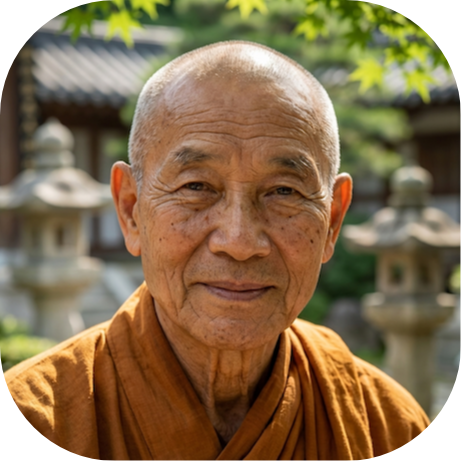
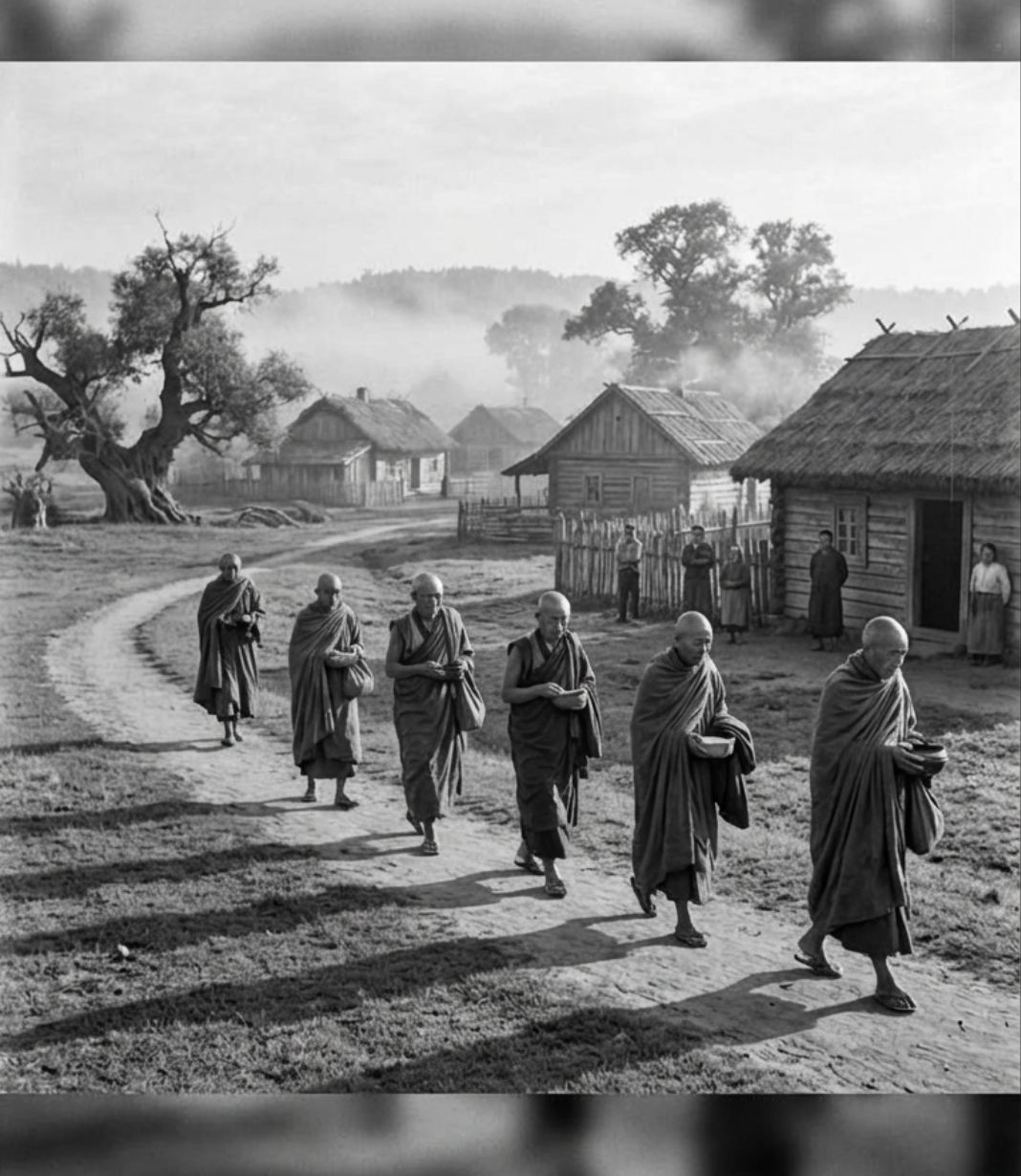
When we see monks walking quietly along modern roads, many believe it is something new — a response to the noise, conflict, and division of our time.
But the truth is deeper.
The Walk for Peace is not a modern movement.
It is an ancient one.
Long before borders, nations, or headlines existed, monks walked not to arrive somewhere, but to be present. Walking itself was the practice. Every step was meditation. Every breath was a prayer. Every mile was an offering.
Walking as a Spiritual Discipline
In Buddhist traditions, walking meditation has been practiced for thousands of years. Monks would walk slowly, barefoot, eyes lowered, fully aware of each step touching the earth. The goal was never speed or distance — it was awareness.
To walk mindfully meant to carry no aggression, no demands, no argument.
Only presence.
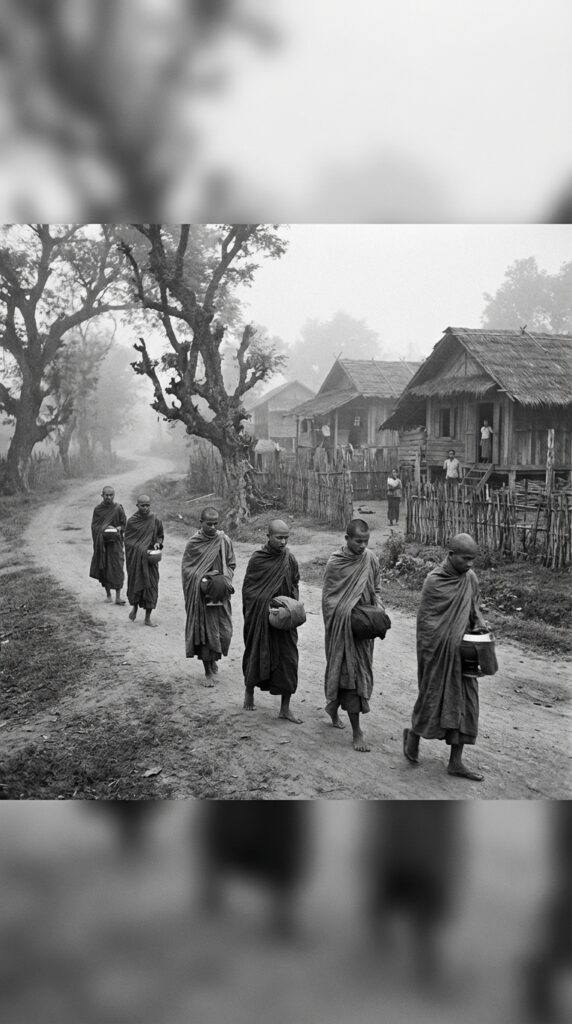
When monks walked through villages, they did not preach loudly or carry signs. They did not argue or persuade. They simply walked — and in that silence, something changed in those who watched.
People felt calmer.
Time slowed.
Attention returned to what matters.
Barefoot on the Earth
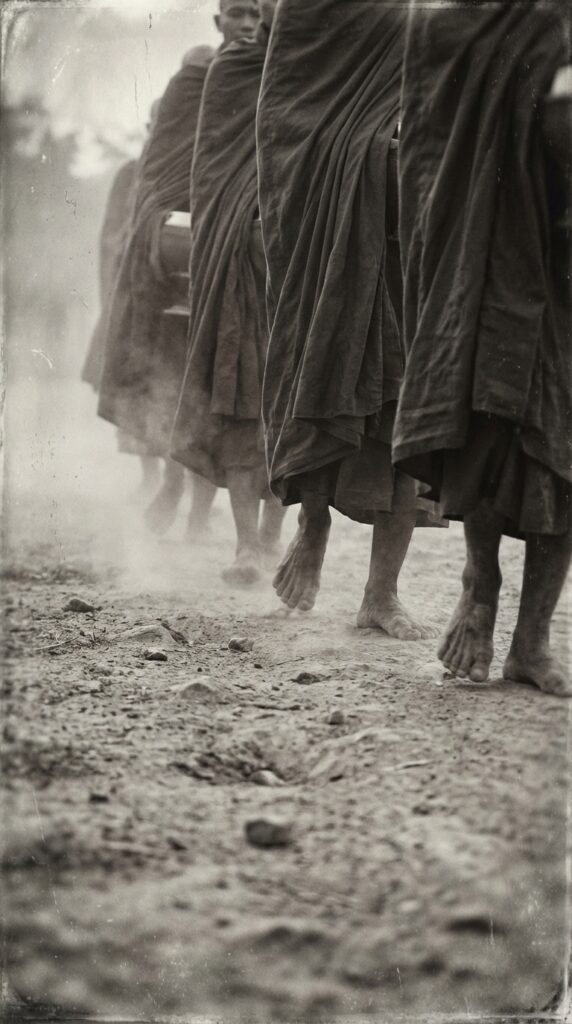
In many traditions, monks walk barefoot not as a symbol of suffering, but of connection.
Bare feet remind us that we are not separate from the ground beneath us. Each step becomes honest. The road is felt as it is — rough, cold, warm, uneven. Nothing is avoided. Nothing is dramatized.
This is why barefoot walking appears again and again in the history of peace walks. It is a reminder that peace does not float above reality. It moves through it.
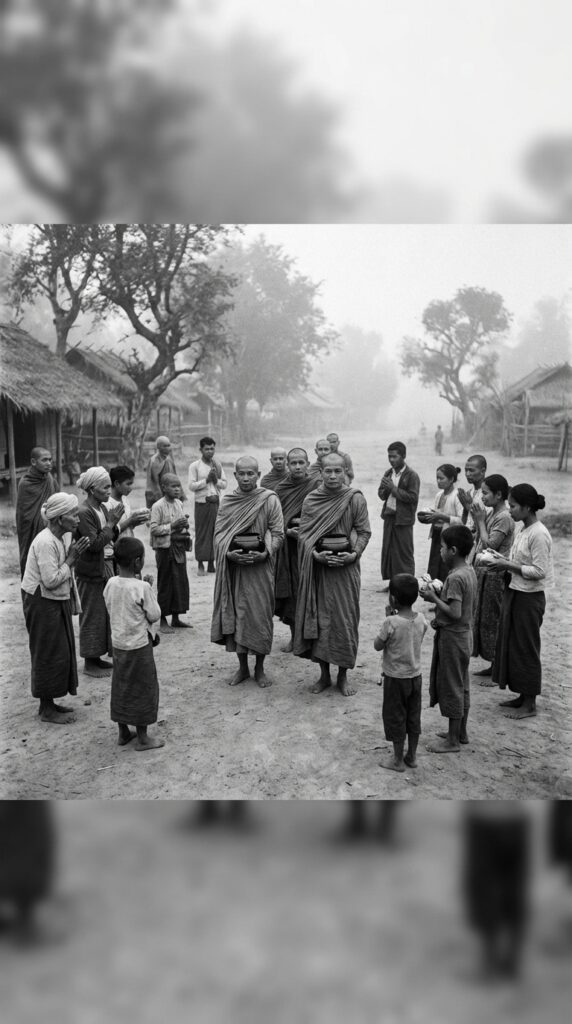
A Message Without Words
Throughout history, monks have walked during times of war, social collapse, and uncertainty. They walked when words failed. They walked when arguments only created more division.
The walk itself became the message.
It said:
Peace does not need to shout.
Peace does not need permission.
Peace begins with how we move through the world.
This is why these walks were never about politics or protest. They were not against something. They were for something — for awareness, compassion, and restraint.

From Ancient Roads to Modern Highways
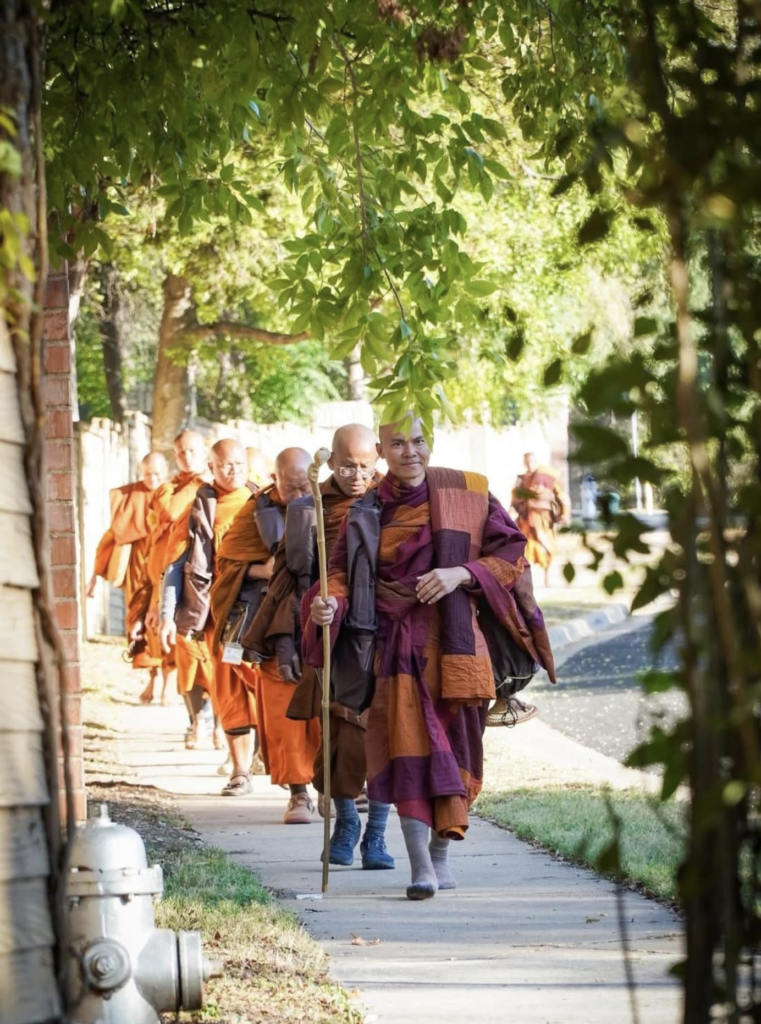
Today, monks walk through cities, highways, and small towns. Cars pass. Phones record. People pause.
The world has changed — but the practice has not.
The modern Walk for Peace carries the same intention as it did centuries ago:
to remind us that action can be gentle, and still powerful.
No money is demanded.
No slogans are shouted.
No anger is carried.
Instead, there is exchange — not of currency, but of kindness. Small bracelets placed on wrists. Flowers offered. Food shared. A quiet bow between strangers.
These moments may seem small, but history shows that small acts repeated with sincerity shape civilizations.
Why This Still Matters
We live in a time of constant urgency. Everything demands reaction. Everything asks us to choose sides, to speak louder, to move faster.
The Walk for Peace offers a different response.
It asks us to slow down.
To notice our steps.
To consider how we move — not only with our feet, but with our words, our food, our attention, and our hearts.
Peace, in this tradition, is not a destination.
It is a way of walking.
A Path That Continues
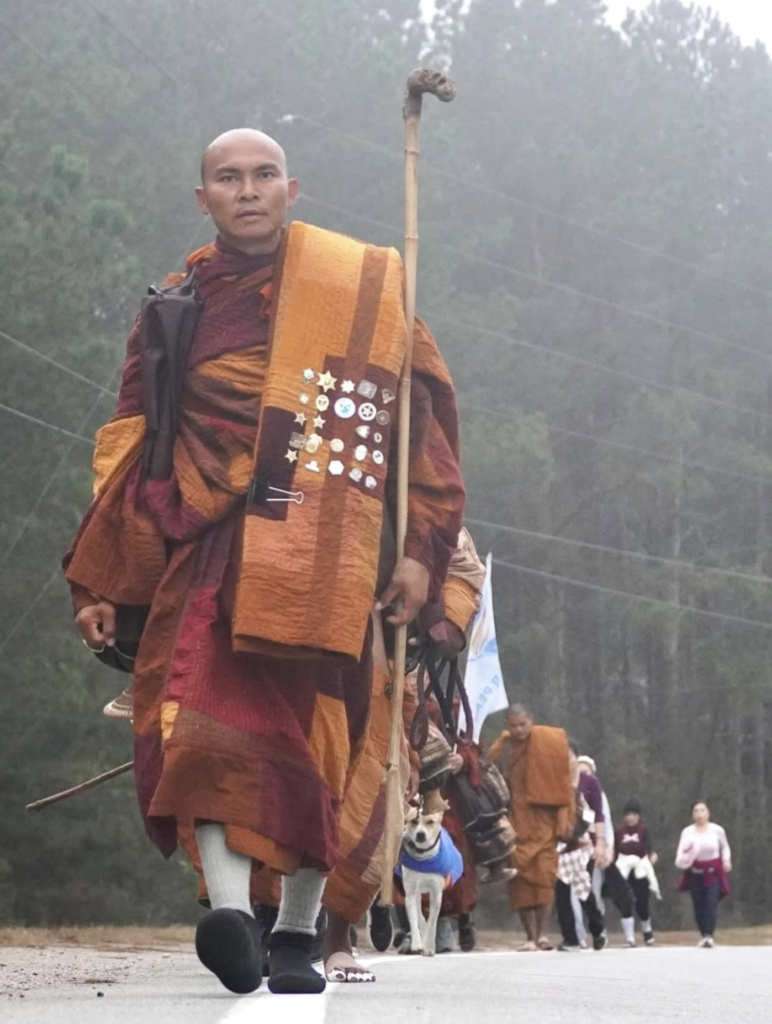
When monks walk today, they do not claim to bring peace to the world. That would be arrogance. Instead, they walk to remind the world that peace already exists — waiting to be practiced.
Each step says quietly:
“You can live this way too.”
And perhaps that is why these walks still move people so deeply. Because beneath the noise of modern life, something ancient recognizes itself.
The road reflects us back to ourselves.
And if we walk it with care, peace follows — one step at a time.
To learn more about the current Walk for Peace and follow their journey, visit the official website here.
No responses yet